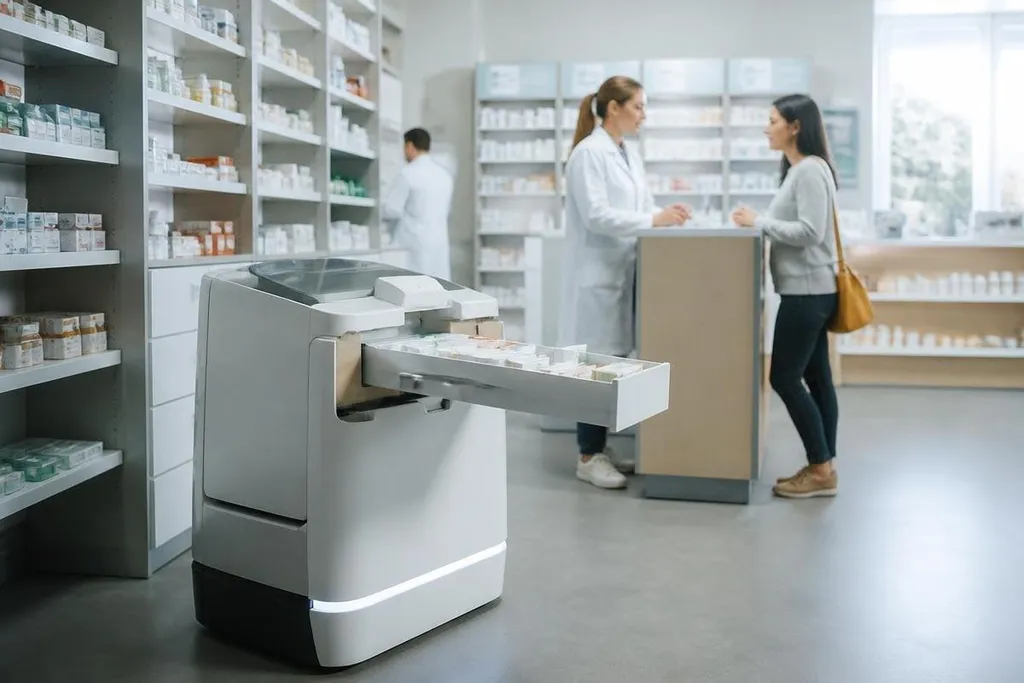
A pharmacy robot could spend its time moving stock, checking labels, and preparing routine orders while pharmacists focus on patients. The useful question is where automation can remove repeated work without taking safety decisions away from trained staff.
Quick read
- Robots could move medicines between storage, preparation, and collection points.
- Barcode checks and software rules can catch some order errors before a medicine reaches the patient.
- Pharmacists would still need to review exceptions, unclear prescriptions, and patient questions.
Where robots fit first
Pharmacies contain many repeated movements. Staff may collect items from shelves, carry them to a work area, sort orders, and return stock to storage. A mobile robot or fixed robotic arm could handle part of that path under set rules.
The robot would need a clear map of the work area, a way to identify each item, and limits that stop it from entering unsafe spaces. Barcode scanners, cameras, weight sensors, or radio tags could support those checks, depending on the pharmacy’s design.
That setup changes the job in a practical way. A pharmacist may spend less time walking between shelves and more time checking a prescription, explaining use to a patient, or speaking with a clinician about a medicine choice.
The robot would still need an exception process. A damaged package, a missing label, or a storage location that does not match the software record should send the task to a person rather than force the system to guess.
Dispensing needs more than speed
Preparing a medicine involves more than picking the right box. The system must match the order, medicine, strength, quantity, and patient record. A mistake in any one of those fields can create a serious risk.
Robotic dispensing systems could use software rules and scans at several points in the process. A check before picking may confirm the order. Another check after picking may confirm the package. A final review may compare the prepared item with the prescription before collection.
Those checks can reduce repeated manual work, but they cannot settle every case. A prescription may need clarification, a patient may report a new symptom, or a medicine may need special handling. These decisions belong with qualified staff.
When a pharmacy order leaves the normal path, the record should show who stopped it and what happened next. Robot 24 reports can put that handoff beside the robot’s task and test date. Those details lead into the limits pharmacies must plan for.
The limits pharmacies must plan for
A pharmacy robot needs reliable data. If the stock record is wrong, the robot can repeat the error with more speed. If a package looks like another item, the system needs a way to stop and ask for help.
Physical layout matters too. Narrow aisles, changing shelves, cold storage, and busy collection areas can make robot movement harder. A system built for one pharmacy may need new maps, rules, or equipment before it works in another.
Staff training is part of the system. People need to know how to pause a task, clear a blocked route, check an alert, and recover an order after a software or hardware fault. A pharmacy that cannot answer those questions is not ready to hand work to a robot.
Cost also reaches beyond the machine. The plan may include installation, software links, maintenance, safety checks, staff training, and space changes. A lower manual workload may help, but the gain depends on the pharmacy’s order volume and layout.
A practical decision guide
Before choosing a pharmacy robot, check these points:
- Name the repeated task: start with shelf movement, sorting, or another job staff perform many times each day.
- Set the handoff rule: state exactly when the robot stops and a pharmacist takes over.
- Check item identity: confirm how the system reads labels, strengths, quantities, and damaged packs.
- Test the data link: make sure stock and prescription records update at the right point in the process.
- Plan recovery: write the steps for blocked routes, failed scans, power loss, and wrong stock records.
- Measure the useful result: compare staff time, order errors, waiting time, and maintenance work before and after installation.
I'd skip a system that promises faster dispensing but cannot show how it handles an unclear order. A pharmacy needs a safe handoff more than a fast arm.
The next useful step is a small trial around one repeated task, with staff recording every stop and exception. That record will show whether the robot reduces work or only moves the difficult parts somewhere else.